

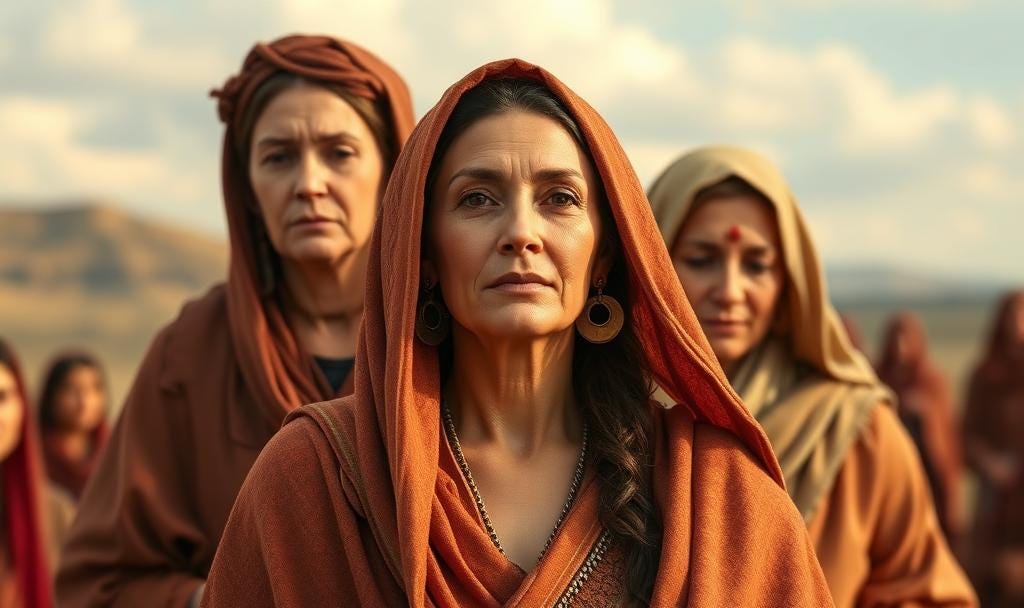
Chapter Two of Payne’s The Bible vs. Biblical Womanhood now enters the practical lives of women who demonstrated not only leadership but, more important, a willingness to be used by God. Read the Old Testament stories of Deborah, Miriam, Sheerah, Esther, Athaliah, Huldah, plus the wife depicted in Proverbs thirty-one, and you can’t help but think of leadership and power. Yet, in many church circles today, women often are relegated to a secondary role with little, and in some cases, no power or leadership in the decision-making process of a church.
Imagine you are gender-blind and read the duplicate biblical accounts of these women in chapter two. If you ditch gender bias, you see what they did and why it mattered, regardless of who they are. Better yet, give each of them a male name, and you will still find individuals exercising strong leadership and power. Bottomline, these women get the job done. Their gender didn’t hold them back; instead, they showed what they could do and how much impact they could have in their situations.
Payne’s analysis makes me think we are looking at this all wrong. Instead of focusing on gender and keeping our emphasis there, we need to consider the overall theme of scripture and its storyline: God. It’s about God’s reputation and our reverence and worship of God. That is our task, our job to do.
Certainly, gender roles exist, along with the ways we are called to express them. However, when it comes to leadership and power, the Bible shows that God will use anyone who is willing and available, regardless of gender. More than that, God can use creation itself, like a donkey to speak and halt a prophecy (Numbers 22), or Elijah in a cave with a whirlwind, earthquake, and fire, followed by a still small voice (1 Kings 19). Men! Should we take note? It doesn’t take a male for God to fulfill His purpose. Rather, it takes anyone or anything that God chooses to use.
The stories of these Old Testament women demonstrate that God's call and empowerment transcend cultural norms and expectations. Rather than constraining our understanding, we should allow these narratives to expand our perspective on how God operates. The key is not gender, but faithfulness, obedience, and a readiness to be used by the Almighty.
As an added note, I find the objections to women in leadership roles cited in this chapter as strained, particularly the argument that women are seen as second-string junior varsity players because God couldn’t find a male to play varsity. So much for God’s wisdom and sovereign choice in the matter.
Based upon Philip Payne’s description of these women, let me recap how great these women were:
Deborah's greatness as a prophetess and judge who led Israel to victory over the Canaanites:
Deborah was a prophetess who received divine messages and guidance from God to lead the Israelites
She served as a judge, resolving disputes and providing leadership for the people of Israel
Deborah summoned the Israelite army commander Barak and prophesied that he would lead the Israelites to victory over the Canaanite army led by Sisera
When Barak was reluctant to go into battle without Deborah, she agreed to accompany him, demonstrating her courage and commitment to the cause
Under Deborah's leadership and with God's help, the Israelites decisively defeated the Canaanite forces, breaking the oppression of the Canaanites over the Israelites
Deborah's victory song celebrated God's power and the Israelites' triumph, solidifying her legacy as a powerful prophetess and judge who helped liberate her people.
Miriam, the sister of Moses and Aaron, played a significant role as a leader during the Exodus. As a prophetess, she led the Israelite women in song and dance, celebrating God's deliverance from Egypt. Miriam also advocated for her brother Moses, ensuring the well-being of the Israelites. Her leadership and prophetic abilities were recognized, and she is remembered as a pivotal figure in the Exodus narrative, guiding the people of Israel during their journey to the Promised Land.
Sure, Miriam wasn't perfect. She and her brother Aaron treated Moses poorly for marrying a Cushite woman, which went against his leadership and challenged his authority. Because of this, Miriam ended up with leprosy as a punishment, but Moses pleaded for her and healed her later. This shows that even important leaders can mess up, reminding us why it's essential to stay humble and respect those in authority.
Let’s consider Sheerah, a lesser-known leader who, in 1 Chronicles 7, built several towns, demonstrating her role in urban planning and community development. Her accomplishments highlight the significant contributions women could make in ancient Israelite society, even if they are not as widely recognized as their male counterparts. Her story reminds us of the diverse ways women exercised leadership and influenced the course of history.
One needs to do a double-take when considering Athaliah, a rather grim example of poor leadership, yet still a leader (2 Kings 11; 2 Chronicles 22 & 23). She was downright nasty. The mother of King Ahaziah, she seized power following her son's death. Outraged over his death, she ordered the execution of all royal heirs, yet somehow bypassed the infant Joash, who Jehosheba, the high priest, hid. Athaliah ruled Judah for six years, showing her ruthless ambition and determination to maintain control. Her actions emphasize the lengths she was willing to go to consolidate her power and eliminate any potential threats to her reign. Again, not someone you would task with leadership, yet she showed a woman of power.
The list of influential women in the Old Testament goes on… Esther’s story takes up an entire book outlining her courage in stopping the extermination of her people, the Jews. Huldah was consulted by high-ranking officials, including the high priest Hilkiah, concerning the newly discovered Book of the Law (2 Kings 22: 14-20 and 2 Chronicles 34: 22-28). A prophetess, she received a direct message from God, warning of impending destruction but promised blessings for Josiah’s obedience. Her actions directly impacted the king and the course of the nation.
Lastly, Payne doesn’t leave out the influence of prophetic women who inspired others and still do today through the Scriptures: Hannah in prayer (1 Samuel 2:1-10), the woman of Proverbs 31, and before the establishment of the church, Elizabeth (Luke 1:25, 42-45), and Mary, the mother of Jesus offering up her praise as the first teaching in the gospel of Luke to echo themes of justice and love for the poor. All strong, humble women (with the exception of Athaliah) willing to be used by God not based on their gender but on their calling.
Those are my take-aways from this chapter. What are yours?
I’m looking forward to looking inside chapter three.