

Dear friends,
I haven’t written anything to post in over a month because, honestly, I felt numb to what’s happening in our world, and my words seemed insignificant compared to the multiple crises unfolding. This week, the world watched as the U.S.-Israeli military campaign against Iran entered its fifth week. President Trump threatened severe damage to Iran’s infrastructure— including power plants, oil wells, and possibly drinking water supplies— if a deal to reopen the Strait of Hormuz isn’t reached. Gas prices in the United States also surpassed an average of $4 a gallon as the conflict affects global markets.
Meanwhile, an estimated 8 million people took to the streets across all 50 U.S. states and more than a dozen countries in protests under the banner “No Kings” — what organizers called the largest single day of protests in U.S. history.
And this week, Holy Week, Israeli police prevented the Latin Patriarch of Jerusalem from entering the Church of the Holy Sepulcher on Palm Sunday — the very site many Christians believe contains the tomb of the risen Christ, blocked by armed officials during the most sacred week in the Christian calendar.
We begin Holy Week in a world that, with familiar dread, mirrors the world Jesus entered on a donkey two thousand years ago. He rode into Jerusalem while an empire occupied the land. Pilate was in the city with Roman support—a deliberate show of force at Passover. The atmosphere was heavy with political unrest, economic worries, nationalist rage, and the scent of empire. Sound familiar?
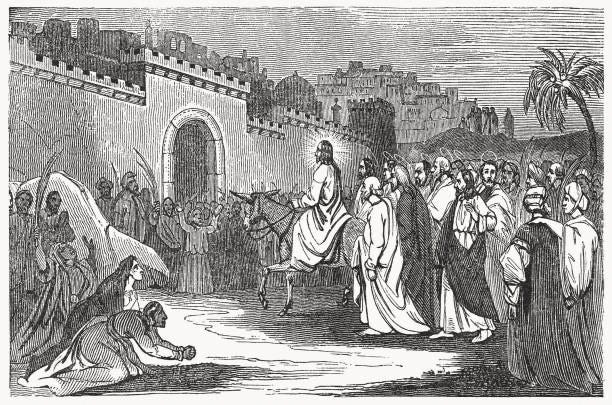
Think of it. The crowds shouted Hosanna — “Save us now!” — not as an act of worship, but as a political demand. They wanted a king who would defeat Rome, reopen the trade routes, and restore their nation's dignity. Instead, they got a king who washed feet, forgave enemies, and died between two criminals.
This gap — between the king the world desires and the King who came — is the ongoing crisis of human history, and it is on full display in real time this week.
When the prophet Isaiah envisioned the Servant of God, he described someone who would not “shout or cry out, or raise his voice in the streets” (Isaiah 42:2) — and who would bring justice to the nations not through firepower, but through faithfulness even to the point of being broken. The kingdoms of this world advance by threatening to obliterate water supplies. The Kingdom of God advances by offering living water to enemies.
This is not naive pacifism. The prophets — Isaiah, Amos, Micah — were unrelenting in their condemnation of empires that oppressed the poor and fought wars for resources. “Woe to those who make unjust laws,” Isaiah wrote (10:1). The Church has never been silent on issues of war and justice. But our primary allegiance is not to any flag, coalition, or protest movement — but to the cause itself. Our foremost allegiance is to a Kingdom that is not of this world, yet fiercely cares for this world.
The blocked entrance to the Church of the Holy Sepulcher should stop every Christian in their tracks. The tomb that could not be sealed — that burst open despite soldiers standing guard — is being approached again, during this holiest of weeks, by someone told they cannot enter. Note the irony: blocking the way with power to the place where power was defeated.
Empires always believe they can control an empty tomb (see Matthew 27:62-66) and understand what it means to be blessed. They cannot.
Jesus did not come to govern the political world. He came to establish a Kingdom that would last longer than any empire that has ever tried to destroy it. The Kingdom is here and now—through acts of mercy, in the refusal to dehumanize enemies, and in the costly acts of those who choose to bear suffering rather than inflict it. And that Kingdom is coming and will be made complete when every weapon is turned into a plowshare and every tear is wiped away.
We are people who live between Palm Sunday and that final Day. We don’t pretend the violence isn’t real. We don’t baptize bombs, and we don’t despair either. We hold the line of the Kingdom — because we know how the story ends.
One concrete act
This Holy Week, perform one tangible act that embodies God’s Kingdom instead of supporting any empire.
Pray by name for someone on the other side. If you are American, pray for an Iranian family. If you're outraged at a political leader, pray for them to be held to the same moral standards as you are. Intercession is a subversive act — it refuses to let any human become just an abstraction or an enemy. (cf. Matthew 5:43-48)
Then find a way to contribute to life in a conflict zone. Organizations like Doctors Without Borders, Catholic Relief Services, or Islamic Relief can help. Yes, people of the kingdom can support human dignity across faiths by helping those affected by bombs and displacement. Each of these organizations is highly rated for effectiveness in both cost and work. Or give to one you feel comfortable supporting.
Our dollars won’t end a war. But it shows, with your money and not just your feelings, that you believe some lives are worth more than oil prices. We won’t solve the Middle East crisis this week, but we are called to be faithful — to carry the presence of a different Kingdom through every person we meet, every dollar we spend, and into every room we enter. That is enough. That has always been enough.
“He will not falter or be discouraged till he establishes justice on earth.” — Isaiah 42:4
(John writes, while Trudy takes care of the heavy lifting editing.)
If you haven’t already, subscribe to receive these reflections in your inbox.
Share it with someone trying to make sense of the news through faith.